
Carlos Villabon (1983 - )
Biography
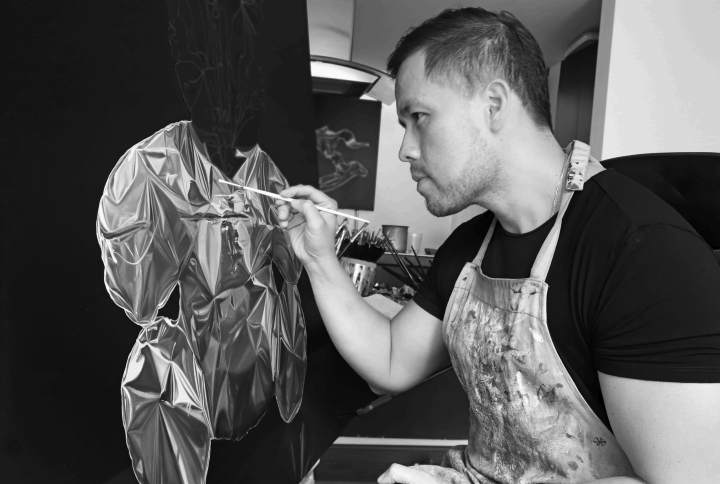
Carlos Villabón was born in Espinal, Tolima, Colombia, in 1983. From an early age, he was a keen observer of his surroundings, the austere and magical environment of provincial Colombian life. He began by painting what he saw around him and perfecting his technique. His work has gone through different stages and evolved in many ways. Villabón is a conceptual artist, but he has never ceased to be a talented painter of large-format paintings. Villabón plays with the concepts of light and darkness, exploring how the materials that surround us connect these two opposites, affecting our imagination and shaping our perception and feelings.
Concept: To keep flies and other insects away, in Colombia and certain tropical regions, plastic bags filled with water are hung at different heights. This popular belief inspired Carlos Villabón to represent these types of bags in a mimetic way and in different formats. This image comes from various hot places where the artist lived and visited during his childhood, a concept that has become one of the central themes of his work. His sculpture and painting projects arise from various formal explorations that Villabón works on: light, darkness, color, and the very materiality of the bags. However, Villabón's reflections go beyond these everyday pictorial representations, as they allude to plastic as a silent weapon that affects the environment and, consequently, our lives.
Flavored ice bags consumed in various regions as candy or simply to beat the heat are another feature of the environment that Villabón has investigated. The “Bolis,” similar to hanging water bags, highlight the artist's mastery of vibrant colors, sparkles, and shades. The reflections also express physical phenomena such as the reflection and refraction of light striking objects.
Appropriations : Everyday objects from individual memory and popular beliefs from his environment form the central axis of all his work. “Celulosas”: ‘Celulosas’ refers to materials made of cellulose, a natural polymer found in plant cell walls. In the context of the text provided, “Celulosas” is used metaphorically to describe the pervasive influence of materials, particularly plastic, in our lives.
The term can also be the title of a work or series by Carlos Villabón, exploring themes related to the impact of everyday objects and materials on our emotions, perceptions, and the environment. The artist uses this concept to reflect on how these materials shape our dreams, fears, and daily experiences. The material context in which we live can determine our emotions; it is an important part of our fears and motivations. The objects that surround us are part of our dreams and nightmares, affecting the way we see, reflecting human obsessions and tastes. Light on objects and surfaces made of different materials brings to life forms that exist in our unconscious or our habits, familiar figures. In the beginning, everything was darkness, and the gods manifested their light in matter; light was reflected in idolized and hated figures. Today, this light falls on our daily lives, on materials, animals, and toys. Thus, in the contemporary world, we live in enclosed spaces full of objects, and light falls on them. There is a special material that accompanies us all the time, an omnipresent and almost imperceptible god and demon, a material necessary for survival and which contributes to our end. Plastic invades our lives and our dreams, and Villabón's figures could be us. With his refined technique, Villabón manages to convey emotions and pose ambiguous questions, good reflections. The objects are luminous and at the same time very dark, even more so than the background; no one can remain indifferent to the mystery of these paintings.
Selection of works
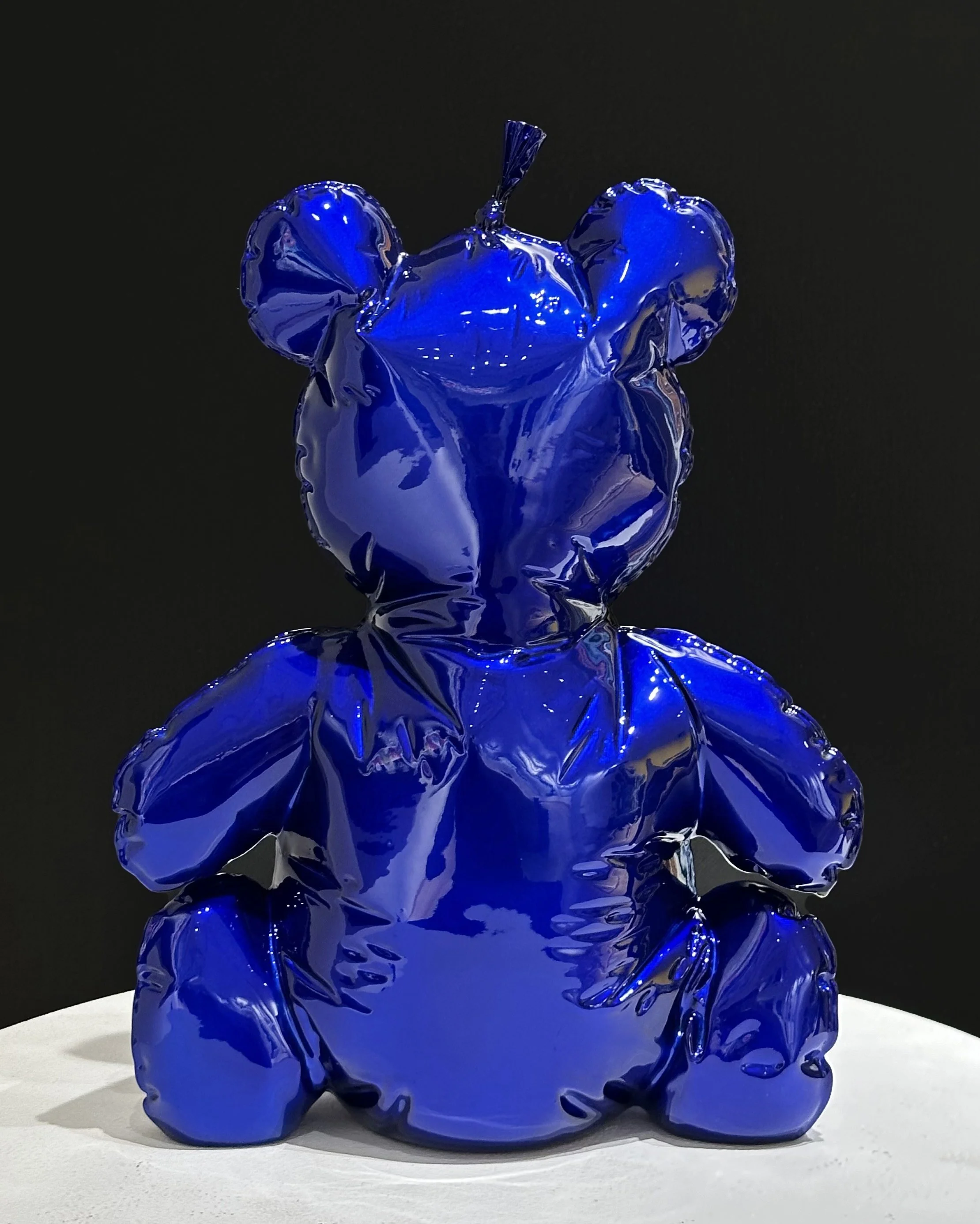
Carlos Villabon
Untitled
Sculpture, Chrome-plated fiberglass - Polyurethane Dimensions : 33 cm de hauteur / 12,99 in. high Ed. 3/6 2024
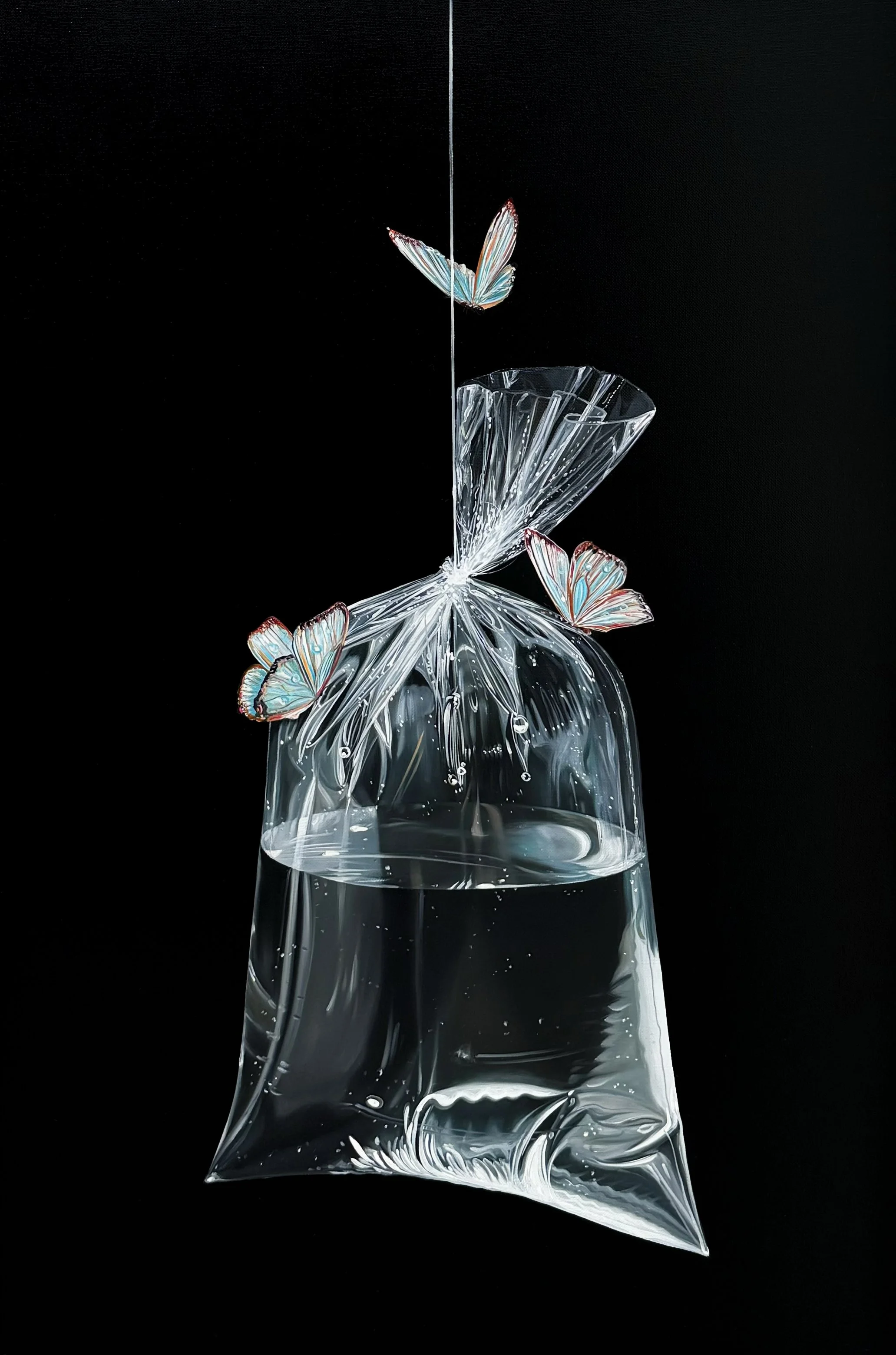
Carlos Villabon
Going to loose something ! Let it be fears
Oil on canvas Dimensions : 90 x 60cm / 35.43 x 23.62 in. 2024

Carlos Villabon
Balloons
Oil on canvas Dimensions : 116 x 146cm / 45.7 x 57.4 in. 2024